Loading...
Siemens integrated design solutions
Learn more about the advantages of Siemens integrated design solutions by browsing the categories below.
View white paper

Siemens integrated design solutions
Learn more about the advantages of Siemens integrated design solutions by browsing the categories below.
View white paper
Today's challenges
Today’s products are smarter, more innovative, with more capabilities—resulting in far greater complexity. Too often, teams work in silos, using non-integrated tools from disparate software vendors, stifling innovation and losing the efficiency of parallel workflows. The result? Slower time to market, higher costs, lost sales opportunities, poorer quality, and team frustration.

$2 million
Amount a single respin can cost
Source: Andy Shaughnessy, "Lee Ritchey on Reducing Respins by One." Design007 Magazine, https://www.magazines007.com/pdf/Design007.pdf
Manufacturer responses as to the #1 issue that drives change in their development processes
Smart, connected product features demanded by customers
Eco-friendly requirements and regulations
Disruption of norms for engineering work, manufacturing or supply chains
Regional differences in customers, markets, suppliers, or regulations
Workforce changes and constraints
Source: Lifecycle Insights, ROI of Digital Transformation Benchmark Report
Areas where complexity is increasing or greatly increasing
On-board or embedded software
Electrical hardware
IoT connectivity and data
Systems
Electrical distribution
Integrated circuits
Mechanical hardware and materials
Source: Lifecycle Insights, Engineering Executive’s Strategic Agenda study
Digital transformation is needed to enable leading product designers and manufacturers to create products faster and more cost-efficiently.
Siemens integrated design solutions
Siemens Xcelerator supports the digital thread throughout the entire product lifecycle, with powerful, integrated tools from a single vendor.
It lets design teams maximize innovation, accelerate time to market, and reduce costs and risks.
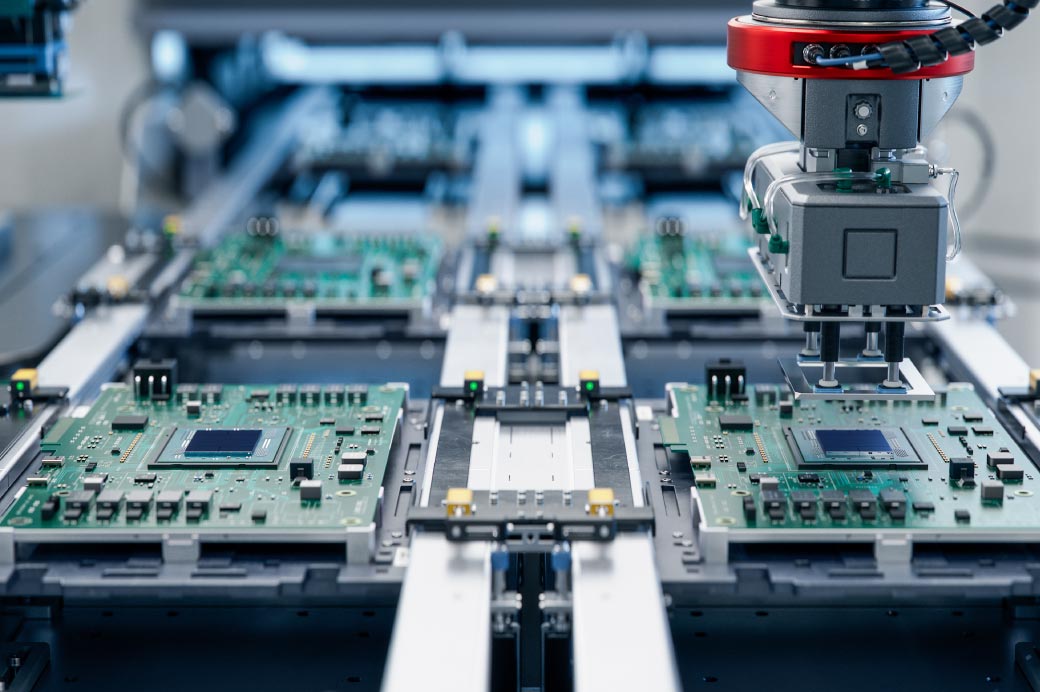
Disconnected design tools
|
Simulation
|
||
|
ECAD
|
|
MCAD
|
|
PLM
|
Integrated design tools
|
Simulation
Simcenter 3D
|
||
|
ECAD
Xpedition
|
|
MCAD
NX
|
|
PLM
Teamcenter
|
With the Siemens Xcelerator business platform, design teams can work in parallel with confidence, with always-available access to the latest project data to streamline their workflow and build better, more sustainable products, faster.
Process management
It is immensely difficult to design and create industry-leading products when each team has its own siloed data and there is no single version of the “truth” for the project as a whole. Keeping teams mutually synchronized with the latest data is time-consuming and inexact—causing significant delays, inefficiency, and frustration that could be avoided if teams could trust they always have access to the latest project data and could collaborate more easily.

What slows down engineers the most in electronics companies?
Too much time wasted on non-value-added work
Too many interruptions
Redoing work
Source: Tech-Clarity
The impact of time wasters on business
Missed deadlines
Higher production costs
Inability to innovate
Inability to stay on budget
Poor product quality
Source: Tech-Clarity
Factors that respondents said increase or greatly increase their organizational complexity
Number of remote participants
Number of customer participants
Number of supplier or partner participants
Number of total participants
Number of participants from different cultures
Number of participants from different countries
Source: Lifecycle Insights, Engineering Executive’s Strategic Agenda study
Teamcenter centralizes all product data and streamlines collaboration across teams, whether they’re in the same facility or scattered across the globe. Teamcenter simplifies complexity, change management, and traceability, enabling teams to work efficiently in parallel with each other, confident they always have access to the single version of the truth.
MCAD innovation
The ideal mechanical design software would be simultaneously powerful and easy to learn and use, enabling designers to maximize product innovation while accelerating time to market.

Design tool qualities that top manufacturing performers said are important to achieving their goals
Source: Tech-Clarity
With NX, product designers can create complex designs faster. NX empowers designers to iterate and experiment faster to create superior products to better compete in the market.
ECAD innovation
Modern devices and products are rapidly becoming smarter and more connected, placing ever-increasing demands on the electronics components within those products. An ideal ECAD solution would enable electronics designers to embrace and resolve the inherent complexity in today’s intelligent, connected products.

Areas where manufacturing respondents said board requirements are increasing or increasing rapidly
Manufacturability
Speed/performance
Reliability
Form factor or packaging
Cost constraints
Source: Lifecycle Insights, Shift-Left Strategy for Electronics Systems Study
Areas where manufacturing respondents said complexity in electronics design processes is increasing or increasing rapidly
Preparing and handing off deliveries to manufacturing
Tracking and managing development projects
Ordering and testing prototypes
Verifying designs
Defining and partitioning board systems
Defining and developing schematics and designs
Laying out boards and implementation
Defining and tracking requirements
Preparing and submitting documentation for certifications
Source: Lifecycle Insights, Shift-Left Strategy for Electronics Systems Study
Xpedition Enterprise is the industry’s most innovative PCB design flow, providing integration from system design definition to manufacturing execution. Its unique technologies can reduce design cycles by 50 percent or more while significantly improving overall quality and resource efficiency.
MCAD and ECAD collaboration
More than 3/4 of organizations either don’t share data between MCAD and ECAD teams or use ineffective tools, such as email and manual file copying, to share data between teams. Of the remaining organizations, 12% use the decades-old IDF format—forcing teams to import the entire design database whenever changes are made, making it difficult to identify changes and updates. Only 12% use the optimal IDX data format.

Manufacturers' responses to the method they use to exchange MCAD/ECAD data
12%
IDX
12%
IDF
29%
Don't share data between MCAD and ECAD
47%
General office tools (email, etc.) or other
Source: Siemens Digital Industries Software, Concurrent Design Webinar Poll
NX, Xpedition, and Teamcenter use the highly capable IDX data format, and build upon it to ensure team members can quickly identify each change, who made it, and when and why it was made—enabling teams to design with speed, confidence, and the minimum of risk.
Simulation
Designing today’s innovative, smaller, lighter, higher-performing electronics products is a challenge in itself. But it’s equally important to ensure those products perform as expected without creating thermal, vibration, or other problems when they’re manufactured. That’s why simulation is such an important part of creating the digital twin.
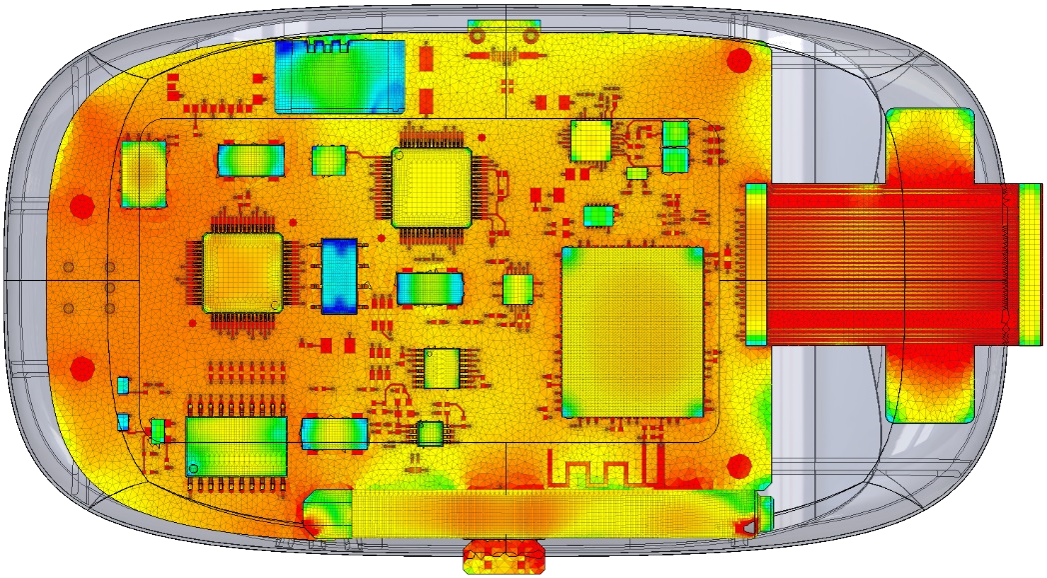
Why companies use simulation tools
Better products
Earlier insight
Faster innovation
Higher return on development investment
Greater productivity
Source: Tech-Clarity
Simcenter software provides powerful simulation tools—seamlessly integrated within NX—so engineers and designers can know in advance how products will perform and if there are potential problems that must be resolved.
The digital transformation advantage
As electronics products have become smarter, more connected, and more complex, winning against your competition requires seamless collaboration between teams, and better process and data management—in addition to powerful MCAD and ECAD software tools.
Research clearly shows that leading companies that embrace digital transformation achieve clear competitive advantages in accelerating time to market, improving efficiency, reducing risk, and maximizing revenue and profitability.
Average number of product-level prototypes per project
Source: Lifecycle Insights, ROI of Digital Transformation Benchmark Report
Average days of inventory
Source: Lifecycle Insights, ROI of Digital Transformation Benchmark Report
Percent of development projects that hit or exceed revenue targets
Least progressive
More progressive
Most progressive
Source: Lifecycle Insights, ROI of Digital Transformation Benchmark Report
Percent of development projects that hit or exceed margin targets
Least progressive
More progressive
Most progressive
Source: Lifecycle Insights, ROI of Digital Transformation Benchmark Report
Discover how Siemens Xcelerator can help your organization achieve your business objectives and stay ahead of the competition.
On-demand webinar
A multi-discipline approach to electronics design
Learn how the digital thread can revolutionize your development process.
Watch webinar

On-demand webinar
A multi-discipline approach to electronics design
Learn how the digital thread can revolutionize your development process.
Watch webinar
CSS Check
This feature is not yet implemented.
Lorem ipsum dolor sit amet, consectetur adipiscing elit, sed do eiusmod tempor incididunt ut labore et dolore magna aliqua. Ut enim ad minim veniam, quis nostrud exercitation ullamco laboris nisi ut aliquip ex ea commodo consequat. Duis aute irure dolor in reprehenderit in voluptate velit esse cillum dolore eu fugiat nulla pariatur. Excepteur sint occaecat cupidatat non proident, sunt in culpa qui officia deserunt mollit anim id est laborum.
Copy the following link and paste in an email:
https://[url_to_asset]/
Copy
An unexpected error has occurred while initializing the application. Click the 'Reload' button below to try again.